From Research to Reality: The Barn Features That Actually Made Life Easier
Updated: Feb 10
When we first started building our little backyard barn, I thought the hardest part would be choosing paint colors or deciding which side the tack room should go on. I quickly learned that none of that mattered nearly as much as the small, practical decisions that shape your daily routine. The things you don’t think about until you’re standing in the rain with a halter in one hand and a coffee in the other, wondering why you didn’t plan this better.
Our barn is a simple shed‑row style. Nothing fancy, but it was the most affordable option in our area and it fits our two‑horse setup perfectly. Still, when we were in the planning phase, I struggled to picture how everything would actually work. What would make chores easier? What would I regret? What would future‑me thank past‑me for?
Now that we’re settled in and the horses have made themselves very much at home, I can confidently say there are a few things I would never build a barn without again. If you’re planning a small backyard barn or tweaking the one you already have, consider this a friendly nudge from someone who learned a lot through research, planning, and plenty of trial and error.
My barn favorites are featured in the Barn Staples list. (As an Amazon Associate, I earn from qualifying purchases.)

If you have draft crosses like I do, you already know they can turn a simple gate into a full‑blown negotiation. Double‑sided latches have been one of the best decisions we made. The gate can swing in or out, but the horses can’t push through from either direction. This has been especially helpful with young horses who are still learning boundaries. Mine figured out early on that “forward” is not an option unless I say so, and these latches made that lesson much safer for both of us.
Stalls That Open on Both Sides
This might be my favorite design choice. Having stall doors that open to the front and the back means I can access the horses from either side of the barn. If I need to grab someone quickly, I don’t have to walk around the entire structure. If the farrier is working in the front, I can feed from the back without interrupting anything. I also love that I can close off either side depending on the wind, storms, or how much airflow I want, and still decide whether they have access to their run or stay fully inside. It gives me so much flexibility in bad weather and keeps the barn comfortable year‑round.

Runs Off the Stalls
Adding runs to the barn was one of the best investments we made. They’ve been invaluable for stall rest, preventing stocking up, reducing colic risk, and simply giving the horses the freedom to move. Mine can choose to be inside or outside, and that freedom has made them calmer, healthier, and far less likely to redecorate their stalls out of boredom.
A Human‑Sized Gap Between the Barn and the Runs
This is one of those small but mighty design choices. We left a narrow gap between the barn wall and the run fencing—too small for a horse to squeeze through, but just wide enough for a person. It means I can slip in and out without opening a gate, which saves time and keeps everything safer. It’s not something you see on Pinterest, but it makes daily chores so much smoother.
A Fully Fenced Courtyard Around the Barn
If you’ve ever had a horse slip past you and take off like they’re auditioning for the Kentucky Derby, you’ll understand why this is essential. Our entire barn area is fenced in, creating a courtyard. So even if someone gets sneaky (and they do), they’re still contained. No loose horses in the yard, no sprinting after them in your pajamas. Just peace of mind.
A Newer Manure Spreader
I cannot overstate how much I love our manure spreader. We don’t have a manure pile at all anymore. Everything gets spread regularly, which has eliminated flies, improved our soil, and kept the property looking clean. If you’re on a small acreage, this is one of those purchases that pays for itself in sanity alone.

This started as a cute idea and turned into a full‑blown system. I ring the bell at feeding time, and now the horses come trotting in like clockwork. The farrier rings it when he arrives too. It’s simple, charming, and surprisingly effective. Plus, it makes me feel like I’m running a tiny horse boarding school.
Frost‑Free Hydrants and Seasonal Hoses
A frost‑free hydrant is one of those things you don’t appreciate until the first time you don’t have to deal with a frozen water line. We installed a Woodford Iowa hydrant, and I recommend it wholeheartedly. Our plumber insisted on it after our previous hydrant failed during the very first snowstorm, and now, several years later, I understand exactly why he pushed for it. It has held up beautifully through daily use and all the temperature swings our area throws at it.
Pairing the hydrant with the right hose for the season has made life even easier. In the summer, I use a Flexzilla hose because it’s lightweight and doesn’t kink. In the winter, I switch to an expandable hose that helps push the water out of itself as it contracts, which makes draining it so much easier when temperatures drop.
Good Drainage Around the Barn
This was an ongoing battle for us, and I cannot stress enough how important it is. Good drainage is the difference between a functional barn and a swamp. We eventually added M10 gravel to our runs, and it has been a total game changer. It packs beautifully, drains well, and keeps the mud under control. If you’re building or renovating, prioritize drainage early. Your future self will want to hug you.
Rubber Mats in the Stalls
Rubber mats were a must‑have for me, even though installing them felt like a CrossFit workout I didn’t sign up for. We layered multiple types of stone and sand underneath so everything packed properly and stayed level. Next time, I’d probably just use M10 because it compacts so well, but either option works. Mats keep the footing level, improve drainage, and make cleaning so much easier. They’re worth every ounce of effort.
A Dedicated Feed Room with Rodent‑Proof Containers
If you give a mouse a bag of grain, he’ll invite his entire extended family. A dedicated feed room with airtight, rodent‑proof containers has saved us from so many headaches. It keeps everything organized, clean, and safe and it means I’m not finding surprise chew marks in expensive feed bags.

Solar Lights and USB Rechargeable Lights
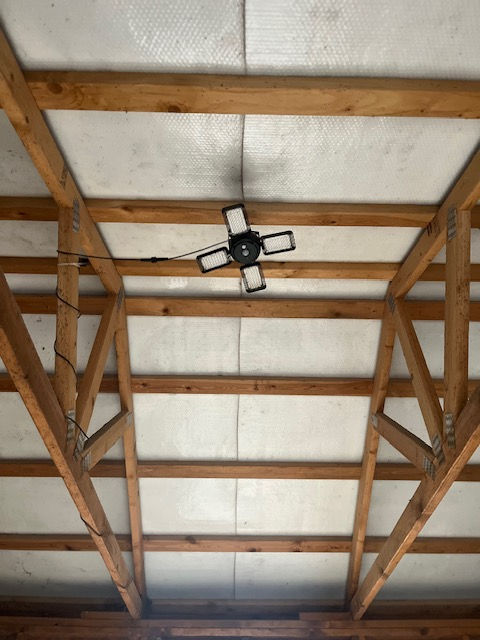
I never ended up running electrical to my barn. I kept telling myself I’d do it later, but “later” never actually happened and honestly, I don’t miss it at all. I found some great solar lights that have held up in every temperature we’ve thrown at them. For nighttime chores, I rely on a mix of motion‑sensor solar lights and the kind that come with a remote, and both serve their own purpose. I also keep a couple of USB‑rechargeable lights on hand, and I only have to charge them every few months since I usually use them for an hour or so at night. It’s a simple setup, but it works beautifully and has made lighting one less thing to worry about. I use these solar lights on the exterior sides of my barn since they are on a sensor. Then, I use these solar lights with a clicker in my stalls (with an exterior mount solar panel). In case the solar lights fail me (which they haven't yet), I got this USB rechargeable light with a remote for my tack room and center storage stall.
Arlo Go 2 Camera System
I love the Arlo Go 2 cameras. The night vision is fantastic, the motion‑triggered recording is reliable, and the best part is that they don’t require Wi‑Fi. My barn is too far from the house for a Wi‑Fi signal, but these cameras run off a SIM card from your phone provider. We’ve used both AT&T and Verizon with no issues. I can check on the horses anytime live or through old footage and that peace of mind is priceless.
Hay Chix Free‑Up Wall Mount Hay Feeder
If you have draft horses, you already know they are professional hay‑feeder destroyers. Mine have ripped through every type of net, bag, and slow‑feeder contraption I’ve ever tried. When I’m rushing to prep hay for the next meal, the last thing I want is to wrestle with a tangled net or a broken clip.
The Hay Chix Free‑Up Wall Mount Feeder has been a total lifesaver. It flips up easily, latches securely, and, most importantly, has been completely indestructible so far. My drafts haven’t managed to tear it, bend it, or outsmart it. It keeps hay contained, slows them down just enough, and makes feeding time so much smoother. For a small barn setup, especially with big horses, this feeder has earned its permanent spot on my must‑have list.
A Small Medical Bin
Every barn needs a little medical bin. Nothing fancy, just the basics. A thermometer, vet‑wrap, gauze, saline, gloves, scissors, and a few essentials recommended by your vet. When something happens (and with horses, something always happens), having everything in one place saves time and stress.
Final Thoughts
At the end of the day, building a barn is one part planning, one part dreaming, and about ten parts learning as you go. No matter how much research you do, there will always be little surprises and things you tweak once the horses move in and start telling you what actually works. But that’s the beauty of a small backyard barn, it grows with you. Every improvement makes chores a little easier, the horses a little happier, and the whole place feel a little more like home. If you’re in the middle of planning your own setup, I hope some of these lessons save you a bit of trial and error and help you create a barn that truly works for you and your herd.


Comments